Pamukkale · Hierapolis · Denizli Province

Things to do in Pamukkale, honestly ranked

Fifteen things, each with how long it takes, when to go and who it actually suits — plus the two that most visitors can comfortably skip. We are a clinic based twenty minutes away, not a tour operator, so nothing here is sold to you.

No affiliate linksWe sell none of this
Timings includedHow long each really takes
Skippable flaggedTwo of them, openly
Start here

The three essentials

If you only have a few hours, these are the three. Everything after this is a bonus.

01

Walk the travertine terraces

Barefoot, down or up the white hillside, through shallow basins of warm water. The thing you came for.

How long: 1–1.5 hours unhurried · Best time: late afternoon to sunset · Suits: everyone, with care — the surface is uneven and slippery in places.
02

The theatre at Hierapolis

Cut into the hillside above the terraces, unusually well preserved, with carving still legible on the stage building. The climb up rewards you with the valley view as well.

How long: 45 minutes · Best time: morning, before the heat · Suits: anyone who has ever liked a ruin.

03

Swim in the Cleopatra Antique Pool

Warm mineral water over fallen columns and cut stone from the ancient city. Separate ticket, inside the site. The only place here you can properly swim.

How long: 1 hour plus changing · Best time: early or late; busy midday · Suits: anyone who wants to be in the water rather than beside it.

Still inside the gates

The rest of Hierapolis, which most people miss

You have already paid to be here. These cost nothing extra and are where the site stops being a photo stop and starts being a city.

04

The necropolis

One of the largest in Anatolia — hundreds of tombs in different styles stretching away from the northern end. Strange, quiet and usually almost empty, even in August.

How long: 45 minutes · Best time: any · Suits: anyone who likes places where nobody else is.

05

Hierapolis Archaeology Museum

Housed in the Roman bath complex, so the building is part of the exhibit. Sculpture and sarcophagi from Hierapolis and Laodicea. The single most skipped thing on the site, and it makes everything outside easier to read.

How long: 30–45 minutes · Best time: midday, when the terraces are harsh · Suits: almost everyone; separate ticket.

06

The colonnaded street

The spine of the ancient city, running its full length between monumental gates. Walking it end to end is the fastest way to grasp how large Hierapolis was.

How long: 30–45 minutes · Best time: morning or late afternoon · Suits: anyone happy to walk.

07

The Plutonium

A small opening beside the Temple of Apollo where carbon dioxide still seeps from the ground — lethal to animals in antiquity, which is exactly why it was treated as a gate to the underworld. Fenced now.

How long: 10 minutes · Best time: passing · Suits: people who like the story more than the view. It is a hole in the ground with a remarkable history.

08

Sunset from the top of the terraces

Not a separate attraction so much as a decision about when to be standing where. The white mineral takes colour extraordinarily well in low light.

How long: the last hour before closing · Best time: obvious · Suits: everyone. Check the day's closing time first — it moves with the season.

09

Sunrise on empty terraces

Requires staying overnight in the village and being at the gate at opening. Cold underfoot, soft light, and for perhaps an hour the place is almost yours.

How long: 1–2 hours · Best time: opening · Suits: early risers and photographers; not worth forcing on a family.

Within an hour

Worth leaving the site for

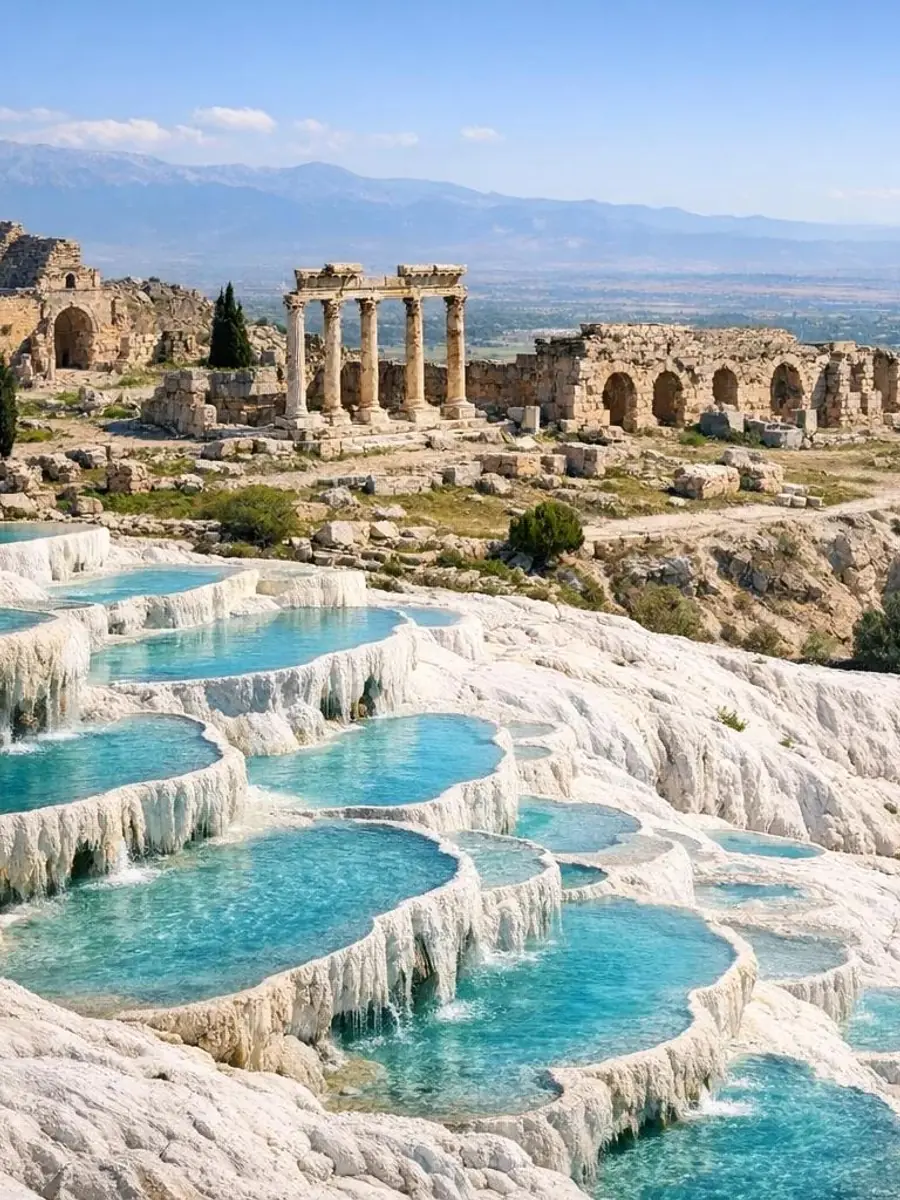
Travertine terraces filled with turquoise water below the stone remains of Hierapolis on the ridge above
The terraces and the ancient city are one site — and the ruins take longer than most visitors allow for.
10

Karahayıt's red springs

A few kilometres north, where iron-rich water stains the deposits rust red and orange instead of white. Smaller and scruffier, and where most of the thermal hotels are. Covered properly in our thermal springs guide.

How long: 1–2 hours · Suits: second-day visitors and anyone whose real goal was warm water.

11

Laodicea ancient city

Large, under active excavation, and remarkably quiet given its scale. You will often have whole streets to yourself. Very little shade.

How long: 2–3 hours · Best time: morning · Suits: people who genuinely like ruins; skip if Hierapolis already felt like enough.

12

Kaklık Cave

Sometimes called an underground Pamukkale — travertine formations inside a cave, on a far smaller scale. Pleasantly cool in summer.

How long: 45 minutes–1 hour · Suits: a short stop on the way somewhere, not a destination in itself.

13

An afternoon in a thermal hotel pool

The unglamorous answer to "where can I actually soak". Many thermal hotels in Karahayıt and the village sell day passes — worth asking rather than assuming.

How long: as long as you like · Suits: anyone who came for warm water and found the terraces ankle-deep.

From the air

Balloons and paragliding

14 · Sunrise balloon flight

Operates in season, at dawn, weather permitting — and cancellations for wind are common, so do not book it for your last morning. Roughly an hour in the air, plus a very early start.

15 · Paragliding over the terraces

Tandem flights launch from the ridge above the site. Short, spectacular, and the best aerial view of the white hillside for the money.

We do not run these, receive no commission, and cannot vouch for any operator. Check licensing and insurance directly with the company before booking anything that leaves the ground, and treat a weather cancellation as good judgement rather than bad luck.

After the gates close

Evenings, and where the food is

Pamukkale village is quiet after dark and geared to visitors — pleasant, limited. Karahayıt largely eats in its hotels. If you want to eat properly, go to Denizli: it is a working city twenty to twenty-five minutes away, and it is where the local cooking actually lives, along with the bazaar and the widest choice of anything.

That distance cuts both ways. Staying in Denizli means an easy dinner and a short drive to everything, but you will not be walking to the terraces at opening time. Our travel guide weighs the three bases against each other in more detail.

Fitting it together

How much you can realistically do

Half a day

Items 1 and 2, at speed. That is genuinely all — and it is why coach day trips from the coast leave people feeling they saw a photograph rather than a place.

One full day

Items 1–3 comfortably, plus two or three of 4–8 depending on your pace. Put the museum in the middle of the day when the terraces are at their harshest.

Two days

Everything inside the site, including sunrise and sunset on the terraces, plus one nearby trip — Karahayıt, Laodicea or a thermal afternoon. This is where the visit stops feeling rushed.

Three or more

Add the second nearby trip, the aerial option, and an evening in Denizli. Beyond that, Pamukkale becomes a base rather than a destination — which is a perfectly sensible way to use it.

Permission granted

What you can skip without regret

Two things, and saying so is more useful than padding the list to twenty.

The terrace "photo spots" everyone queues for

There are one or two basins that appear in every photograph, and there is often a queue to stand in them. The terraces are long. Walk another two minutes and you will find the same water, the same white, and nobody in your frame.

A second ancient city, if the first one tired you

Laodicea is genuinely good, but if you finished Hierapolis footsore and templed-out, going to another large exposed archaeological site the next morning is how a holiday becomes an obligation. Go to Karahayıt or a thermal pool instead — you will enjoy the trip more and remember it better.

Frequently asked

Questions visitors ask

What is there to do besides the terraces?

The ancient city of Hierapolis sits directly above them and is extensive — a theatre, a colonnaded street, one of the largest necropolises in Anatolia, and an archaeology museum in a Roman bath building. Beyond the site: the Cleopatra Antique Pool, the red springs at Karahayıt, Laodicea, Kaklık Cave, and Denizli for food. Most visitors underestimate how much is here.

Is the archaeology museum worth it?

Yes, and it is the most commonly skipped thing on the site. It is housed in the Roman bath complex, so the building itself is part of the exhibit, and it holds sculpture and sarcophagi from Hierapolis and Laodicea. Thirty to forty-five minutes, and it makes the ruins outside easier to read.

Can you watch the sunset at Pamukkale?

Yes, and late afternoon into sunset is the best time to be on the terraces: warmest water, gold light on the white mineral, and the coach groups gone. Check the day's closing time before planning around it — it changes with the season.

Are balloon flights and paragliding safe?

Both operate over the valley in season. We do not run them, have no commercial relationship with any operator, and cannot vouch for any of them. Check licensing and insurance directly before booking anything that leaves the ground, and expect weather cancellations.

What can you do here with children?

The terraces work well — shallow warm water, barefoot walking, the novelty of a white hillside. The surface is uneven and slippery in places, so hold hands. The Cleopatra Antique Pool has deeper sections with submerged masonry, so supervision matters. Hierapolis is a lot of walking with little shade, which is the part young children find hardest.

What is there to do after Pamukkale?

Most people continue to the Aegean coast — Ephesus and Kuşadası, or Bodrum further south — or fly onward from İzmir. Denizli's bus connections make almost anywhere in western Turkey reachable, and Denizli Çardak has flights, though a limited and seasonal schedule.

Do I need a guide?

Not for the terraces. For Hierapolis a guide genuinely adds something, because the site is large and much of it is unlabelled — but the museum plus a good plan will get you most of the way for less. We do not arrange guides and have no one to recommend.

Planning the rest

Where to go from here

The practical decisions

How many days, which of the three entrances to use, when to come and how to get here.

Pamukkale travel guide →

If the water is the point

Where you can actually swim, how warm it is, what the rules are — and an honest answer about the healing claims.

Thermal springs guide →

And if your trip is also a chance to deal with something health-related you have been postponing, that is a separate conversation — we wrote it up here rather than putting it in the middle of a list about ruins.

About this page

Written by Dr Otgen Clinic, a medical clinic in Denizli, about twenty minutes from the travertines. We are not a tour operator and sell no tours, tickets, guides or accommodation. Last content update: .

Opening hours, ticket arrangements and which attractions are open change — check current official information before you travel. Background on the site: UNESCO World Heritage Centre — Hierapolis-Pamukkale. This reference is not a statement of accreditation or affiliation.